Protecting the quality of the area’s groundwater is an important goal of the Barrington Area Council of Governments (BACOG). The groundwater supply in the BACOG area is recharged (replenished) locally, which means what you put on the ground today could be in the water you drink tomorrow. Increasing chloride levels from salting threaten our only source of drinking water as well as our natural environment, a defining characteristic of the BACOG region.
Salt (sodium chloride) is among the earth’s most abundant and essential minerals. But too much of it can have negative impacts. Once in surface waters or groundwater, the chloride from dissolved salt is not removed by any natural chemical process. Therefore, once chloride is in the water, it remains there.
Road and pavement salting during the winter months is the primary way chloride enters the environment. Rock salt dissolves quickly on roads and driveways, and its chloride flows with stormwater into nearby lakes, streams and wetlands where it builds up and puts aquatic life and ecosystems at risk. Chloride also impacts residents directly by rusting vehicles and pitting home driveways and sidewalks. Through percolation and the recharge process, chloride also contaminates our groundwater — the source of private well and municipal water in the BACOG communities.

Did you know it only takes 1 teaspoon of salt to permanently pollute 5 gallons of water?
Homeowners, businesses, schools and others use rock salt to melt ice and snow on parking lots and walkways. This helps reduce accidents, slips and falls. But the application rate of these products is often excessive and results in water contamination.
Salt products can also be hazardous to pets and animals. The salt can irritate their paws and cause health problems if ingested. Did you know that birds can confuse road salt for food? Consuming only two particles of rock salt can be fatal.
You can help reduce the amount of chloride entering our drinking water and the environment with a few simple steps this winter:
Shovel or plow instead of salting. Clear driveways, walkways and other areas early before snow turns to ice.
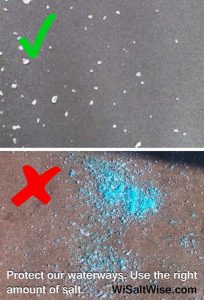
Stop over-salting. Read instructions on your salting product to ensure proper application rates. A 12- ounce coffee mug full of salt is enough to treat a 20-foot driveway. (See image below for proper salt application.) Sweep up and re-use excess salt.
Switch products. When pavement temperatures drop below 15 Fo, rock salt doesn’t work. Use a different ice melter designed for lower temperatures such as magnesium chloride or calcium chloride. Switch to sand for traction.
Lower expectations. Road and parking lot managers have the challenge of meeting the expectations of drivers, property managers and customers while balancing the environmental effects of salting. Remember, the purpose of salting is to reduce the adherence of snow and ice to the pavement in order to make it easier to remove. It is not intended to keep the roads and walkways completely clean and dry. Support your government’s efforts to reduce salt use.
Speak up. Look for proper salt use at the stores and businesses you visit. If they are using the right amount of salt, thank them! If there is an excessive application of salt, speak up and refer them to www.wisaltwise.com for additional information.
Share your salt smarts. Talk to your neighbors about proper salting and the importance of protecting the environment and our drinking water. Make sure your snowplow contractor is using the proper amount of salt. Click here for questions to ask your contractor.
For more information about the environmental impacts of salt and how to reduce salt pollution, go to www.BACOG.org and www.wisaltwise.com.